ASPN Labs: repositioning a healthtech platform, with two funding rounds along the way
A US concierge health optimisation platform came to us twice: first for a brand and pitch deck that raised $140K, then for a full repositioning, UX and a compliant purchase flow for regulated health products that preceded a $120K follow-on round.
The question
ASPN Labs is a US concierge health optimisation platform for executives, professional athletes and serious biohackers. It combines at-home diagnostics, clinician-reviewed peptide and hormone therapy, neural optimisation, inflammation tracking and wearable integration into one membership.
Founder Jake Allen, an eight-season Division I and MLB athlete, came to us twice. The first time the product was pre-launch and the question was simple: what does it take for investors to take this seriously? The second time, after a funding round and a new advisory team from MLB, the NBA and Harvard Business School, the question had changed. The product was no longer a performance fitness app. It was a clinical-grade service competing with Hone Health, Lifeforce and Function Health. Could the brand, the product experience and the purchase flow be rebuilt to match, without losing the momentum of the first round?
Round one: what we found and what we built
The first version needed to open doors. We built the brand identity (visual system, palette, typography, iconography), the marketing website, and an investor-ready pitch deck aligned to it.
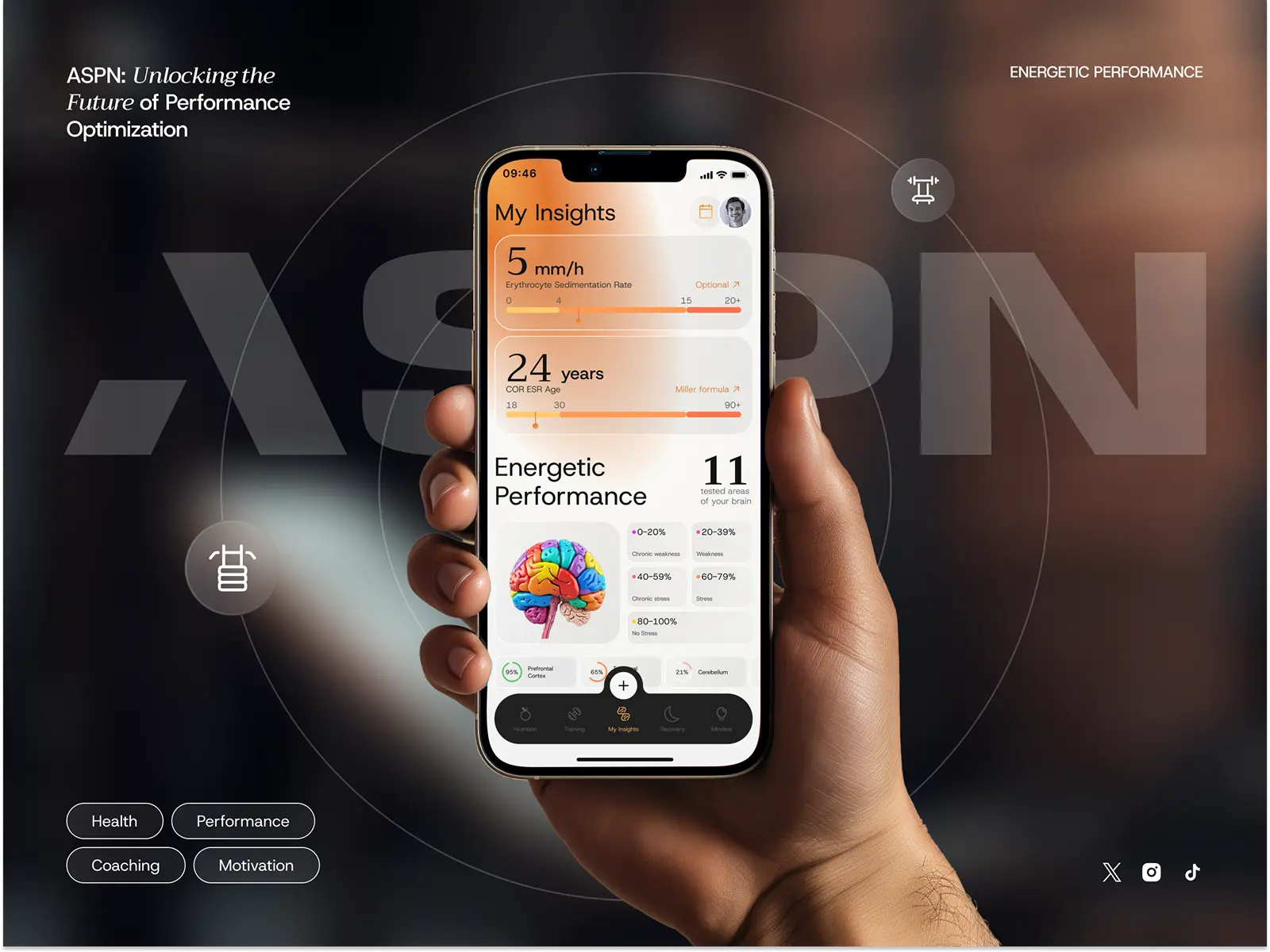
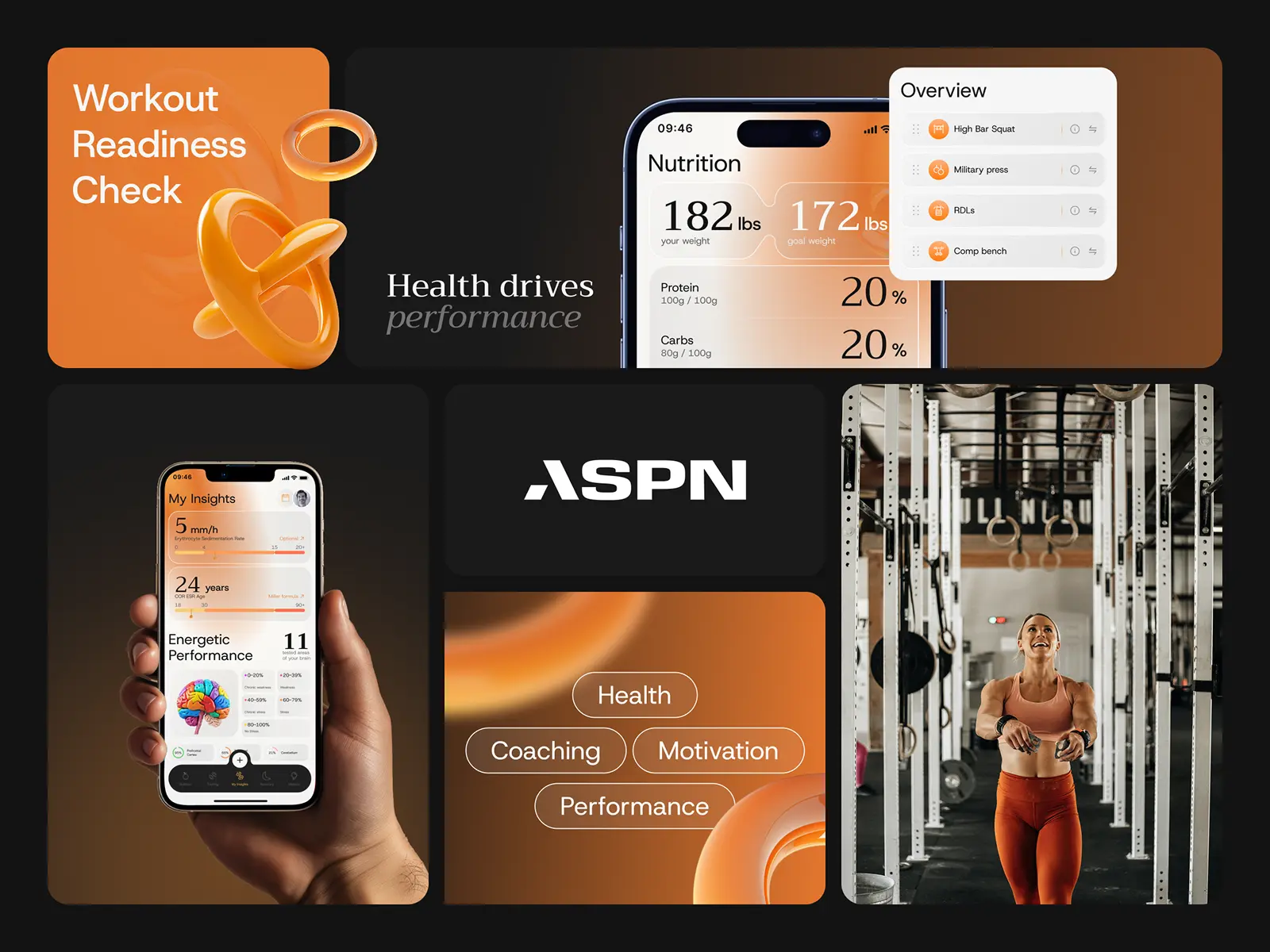
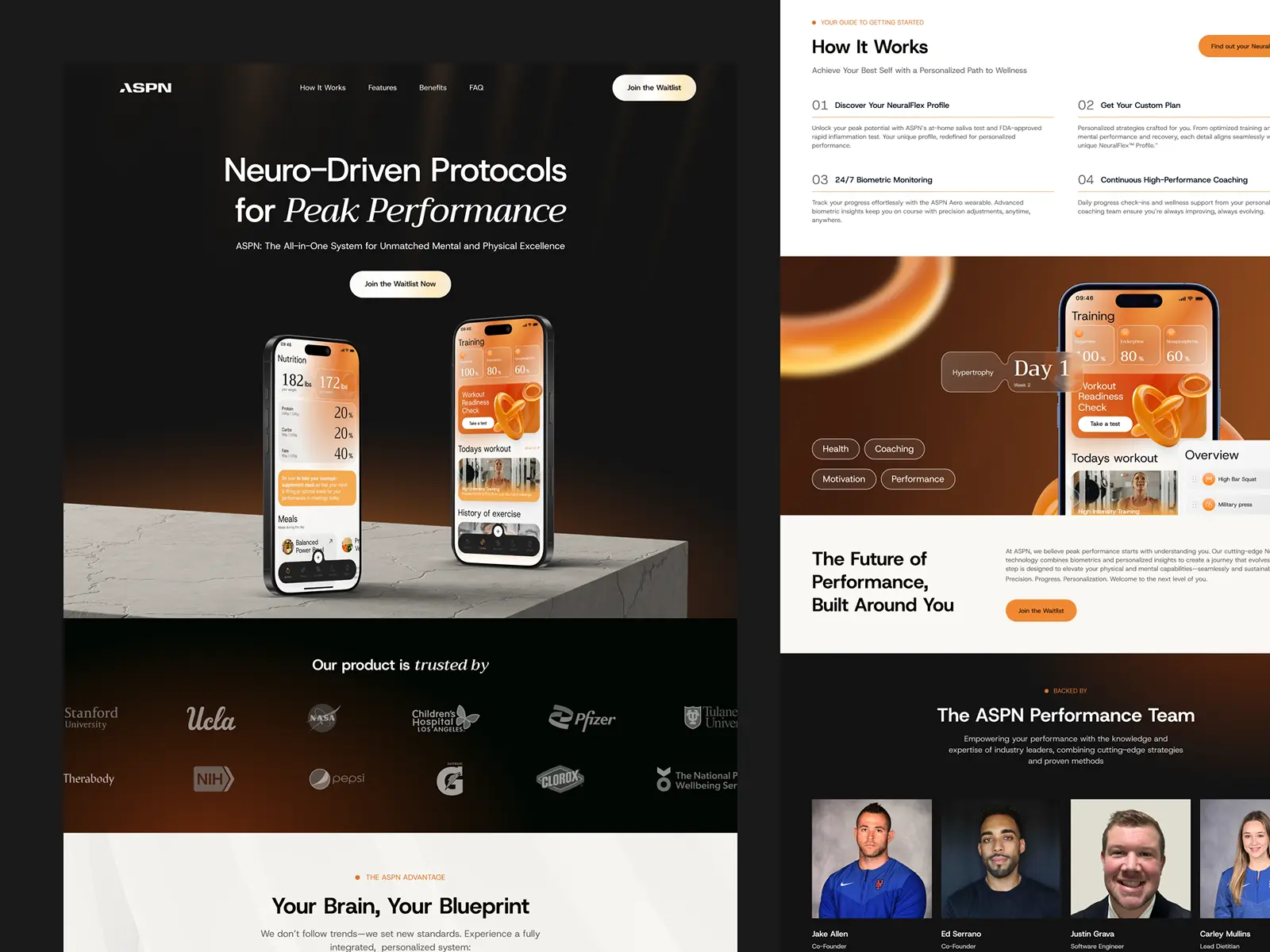

ASPN Labs secured $140,000 from an angel investor shortly after.
Round two: what we found
Three things had changed, and the evidence was in the new business plan and the new team.
- Different audience. Executives and elite biohackers, not fitness enthusiasts. They expect credentials, not energy.
- Different price point and trust bar. A concierge medical service is judged against private clinics. The original orange, high-energy brand read as a fitness app.
- Different product complexity. TRT, HRT, peptide therapy, neural optimisation, inflammation tracking, diagnostics, supplement stacks and three membership tiers. Each needs a different journey depending on the visitor's goal, and none of it can require the visitor to know medical terminology up front.
- A regulatory constraint on selling. Shopify Payments had banned the account because peptide products are a high-risk merchant category, and certain therapies require age and identity verification before purchase.
What we decided
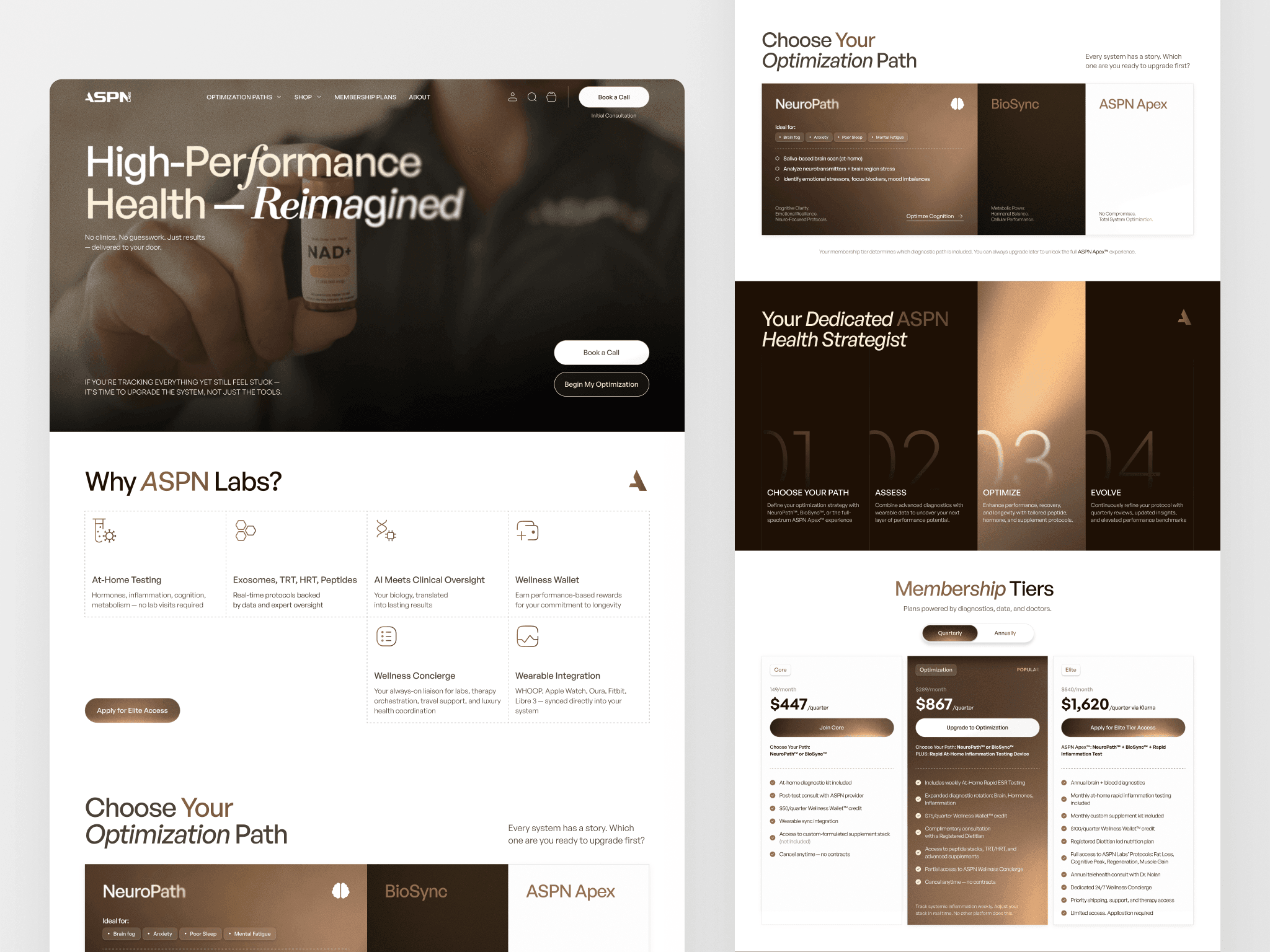
Rebuild the brand for clinical precision, not for a gym. Deep warm darks with gold accents, editorial typography with selective italic emphasis, a direct data-driven tone, minimal medical-adjacent iconography, and photography of real athletes and professionals rather than stock wellness imagery. The result reads as a premium private clinic, credible enough to sit next to the medical team's credentials.
Organise the product by the user's problem, not by catalogue. Instead of product categories, the experience starts from a symptom or a goal and leads to the right protocol and tier:
- NeuroPath for brain fog, anxiety, poor sleep and mental fatigue
- BioSync for fat loss, hormone balance, energy crashes and inflammation
- ASPN Apex for executives and biohackers who want everything

Make the comparison explicit. An educated buyer is already comparing. The site names Hone, Lifeforce, Hims and PeterMD directly in a comparison table, presents membership tiers with a quarterly and annual toggle borrowed from SaaS pricing, and builds the team section around advisor credentials from the New York Mets, Jacksonville Jaguars, the NBA and Harvard Business School.
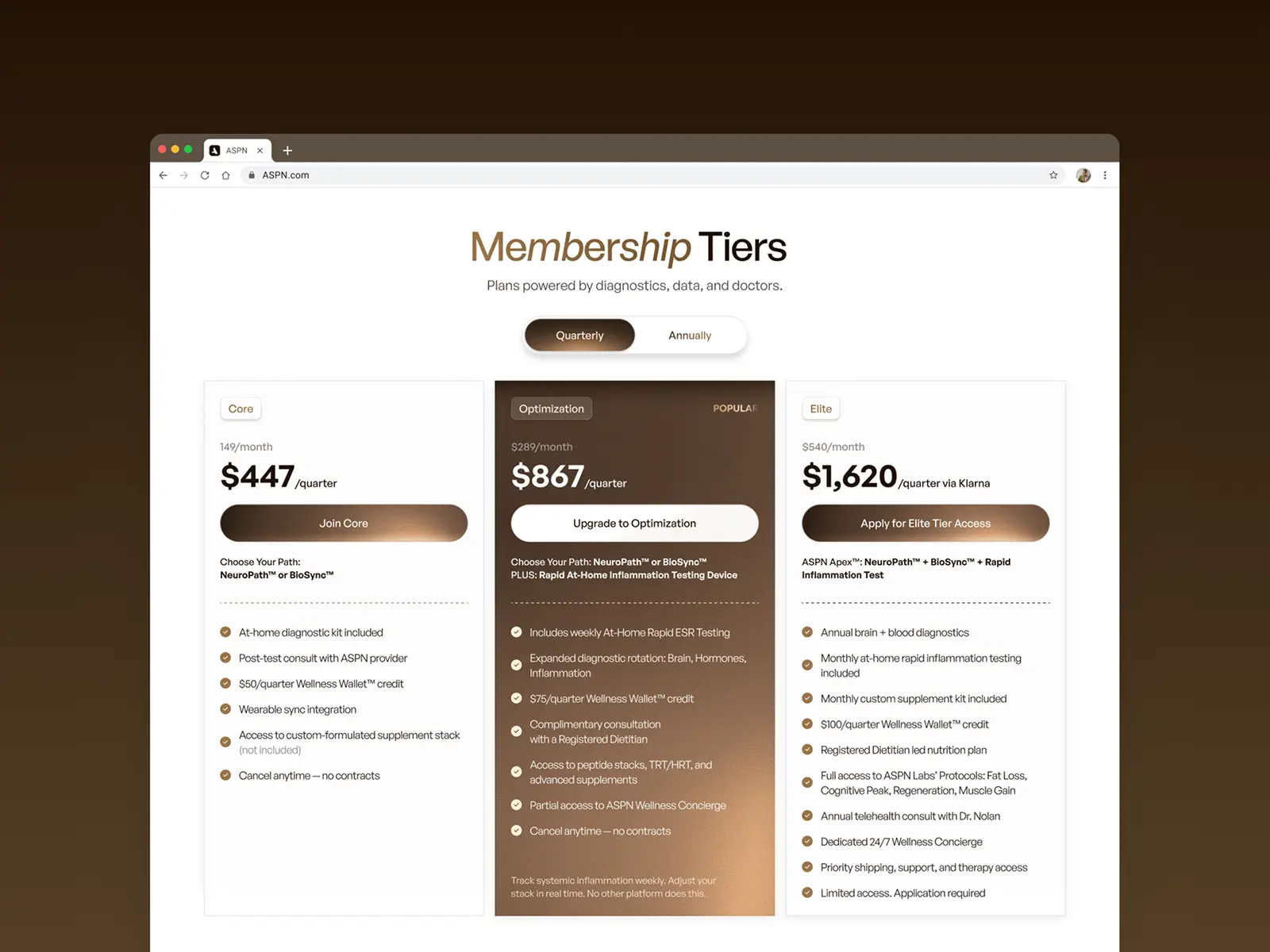



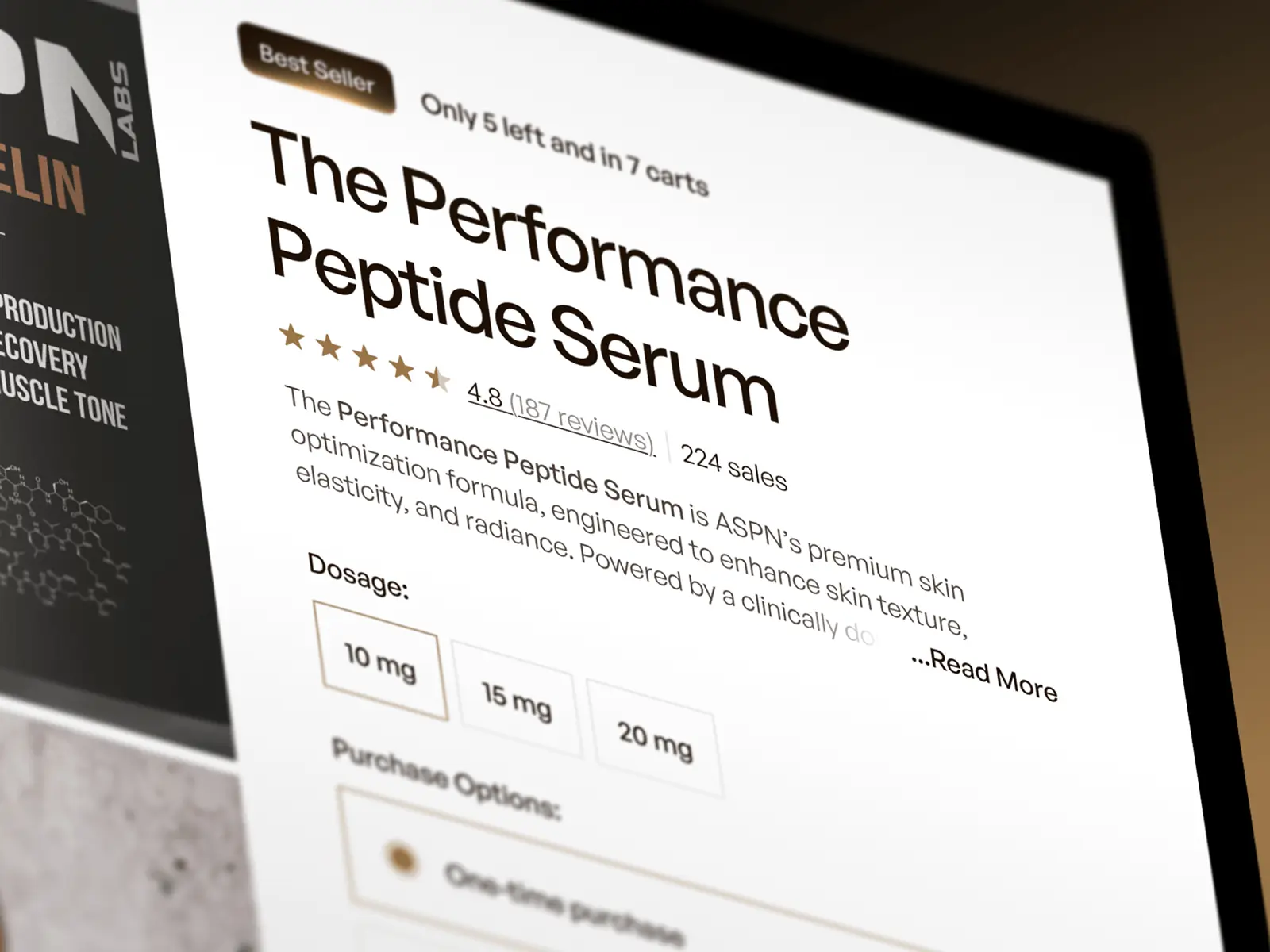
Solve compliance inside the purchase flow, not around it. We sourced and integrated PayCreate, a payment processor built for regulated health and wellness products, to replace Shopify Payments without changing the buying experience. For therapies that require it, an identity verification plugin runs inside the product flow, so qualified buyers verify once and move on.
What it produced
- $140,000 angel investment after the first engagement.
- $120,000 follow-on round in January 2026 after the rebuild (per SignalBase).
- The full platform, from brand to UX to storefront, built from scratch in under twelve months across nine optimisation paths, membership pages and product pages.
- A purchase flow that stays compliant for regulated products without adding friction for qualified buyers.
- An advisory team and brand positioned to compete in a market where Function Health raised $298M at a $2.5B valuation.
What this looks like for your team
Healthtech products carry constraints a generic agency never meets: regulated products, identity checks, trust requirements closer to a clinic than to an app. If your product is in that position, bring the flow that worries you most to a Trial Week and we will tell you what it takes.